Learn what NEMT means, who uses it, how wheelchair and stretcher rides work, what affects pricing, and how to arrange a private-pay medical ride in Los Angeles County. Quick answer Non-emergency medical transportation (NEMT) is scheduled transportation that helps someone reach medical care when they do not need an emergency response. Depending on a passenger’s needs, the trip may use a wheelchair-accessible vehicle, stretcher transport, or another suitable medical-transport arrangement. Unlike a 911 ambulance response, NEMT is planned around an appointment, treatment, discharge or other healthcare journey. The exact meaning of a covered NEMT benefit can be narrower under insurance programs; California Medi-Cal, for example, distinguishes NEMT from ordinary non-medical transportation. NEMT is useful when a person can attend a scheduled medical appointment but cannot comfortably or safely use a regular ride for that particular journey. The need might involve a wheelchair, difficulty walking, a discharge after treatment or repeated trips every week. Passengers who need accessible boarding and a vehicle suitable for their wheelchair and mobility equipment. Seniors who benefit from prearranged transportation and clearly coordinated pickup instructions. People whose mobility requirements call for an appropriate stretcher or gurney trip rather than seated travel. People attending dialysis, rehabilitation, physical therapy or repeated specialist appointments. People cleared to leave a facility who need a planned ride home or to another care setting. People coordinating transport for a relative who needs help planning an accessible medical journey. Not every older adult or medical appointment automatically requires a specialized NEMT vehicle. The right transportation choice depends on the passenger’s condition, mobility equipment and required assistance. “Medical transportation” is not a single vehicle type. A good trip request identifies whether the passenger can sit normally, needs a wheelchair-accessible ride or must travel lying down. Here are the principal options to understand. Wheelchair transportation is for passengers who need an accessible vehicle and appropriate boarding or securement arrangements. Tell the provider whether the wheelchair is manual or powered, the passenger’s mobility limitations and the pickup entrance. Accessible equipment and assistance should be discussed before the trip; do not assume every vehicle supports every wheelchair size or configuration. Stretcher and gurney transportation may suit people who cannot comfortably travel seated but do not require an emergency ambulance response. It should be arranged with details about positioning, transfers, access, weight and any medical needs that may require a higher level of care. A non-emergency stretcher vehicle is not a substitute for emergency medical assessment or ambulance-level monitoring. The most important difference is the level of urgency and support needed—not simply whether a trip ends at a hospital. Scheduled medical trips with a transportation mode selected around mobility requirements, accessibility and pickup coordination. It does not automatically include clinical monitoring. For potentially serious or life-threatening situations requiring immediate assessment, emergency transport or clinical care. In an emergency, call 911. Potentially appropriate when the rider can safely use an ordinary vehicle and does not need specialized accessibility, transfer support or other assistance. For an actual medical emergency—such as severe breathing difficulty, chest pain or sudden signs of stroke—do not book a scheduled ride. Call 911 immediately. Common requests include doctors’ appointments, diagnostic visits, dialysis, rehabilitation and non-emergency trips connected with hospital stays. The trip should be planned according to the passenger’s mobility needs and the destination’s pickup or discharge requirements. Dialysis transportation can involve multiple trips per week. A repeat schedule can help patients, caregivers and the transportation team coordinate pickup times consistently around treatment appointments. Non Emergency Medical Ride LLC offers a 10% discount for all recurring patients. Provide your recurring schedule when requesting a quote. Hospital transportation can help coordinate non-emergency rides to scheduled visits or after discharge. For a discharge trip, confirm that the hospital has cleared the patient, who will assist at the exit, the pickup location and whether a wheelchair or stretcher is needed. The transportation provider should not be assumed to replace the hospital’s clinical discharge team. Recovery plans may require frequent visits for rehabilitation and physical therapy or doctor appointments. Before travel, discuss stairs, walking aids, needed assistance and any restrictions given by the treating team. For seniors receiving ongoing care, senior medical transportation can also help families arrange predictable trips. A well-planned ride begins before the vehicle arrives. Sharing complete details allows the transportation team to review whether the requested service suits the passenger and is available. Provide the passenger’s contact information, pickup address, healthcare destination, requested date and time, and whether the ride is one-way, round-trip or recurring. State whether the passenger uses a wheelchair, walker or stretcher, their approximate weight, any steps or access barriers, and whether companions will travel. Review the available vehicle, trip details and price. A submitted request does not mean the ride is confirmed until the provider confirms it. There is no single accurate price for every medical ride. A short ambulatory trip, a wheelchair-accessible round trip and a longer stretcher transfer can have very different requirements and costs. For an accurate quote, request a price based on the actual passenger and route. At Non Emergency Medical Ride LLC, all recurring patients receive a 10% discount. Medicaid/Medi-Cal: Transportation benefits may be available to eligible members. California’s Department of Health Care Services separates non-medical transportation (NMT) from specialized non-emergency medical transportation (NEMT). Medi-Cal NEMT generally requires a qualifying need and a prescription from a licensed provider. Members should contact their health plan or care provider to understand the benefits and authorization process. See the California DHCS transportation guidance. Medicare: Original Medicare generally does not pay for routine car or wheelchair-van rides to appointments. However, Medicare Part B can cover certain medically necessary non-emergency ambulance trips under strict conditions, such as when other transportation could endanger the patient’s health. See Medicare’s ambulance coverage information. If you are looking for “non-emergency medical transportation near me” in Los Angeles County, the best starting point is your pickup address, destination and mobility requirement—not simply the nearest company name. Confirm that the provider can serve the route and supply the type of transportation you need. Non Emergency Medical Ride LLC accepts private-pay ride requests across Los Angeles County, subject to scheduling and vehicle availability. Explore some of our city service pages for locally relevant information: For assistance choosing the right ride type, visit our medical transportation services overview or call 909-301-4850. NEMT stands for non-emergency medical transportation. It describes planned transportation connected to healthcare needs when emergency response is not required. No. Routine NEMT may involve a wheelchair-accessible van, stretcher transport or other scheduled vehicle, depending on the passenger’s needs. An emergency ambulance is for situations requiring urgent emergency care. Yes. Wheelchair transportation may be an appropriate choice when a passenger needs accessible boarding, mobility equipment accommodations and suitable securement. The precise needs should be discussed before booking. Yes, non-emergency hospital-discharge transportation can be arranged when the passenger is cleared for discharge and the transportation type suits their mobility needs. Confirm the release time, pickup entrance and destination. Coverage depends on the program and circumstances. California Medi-Cal has transportation benefits for eligible members, while Medicare covers certain medically necessary non-emergency ambulance trips under specific conditions. Non Emergency Medical Ride LLC is private pay and does not bill Medicare, Medi-Cal or other insurance. Pricing depends on distance, transportation type, required assistance, scheduling and other trip details. Request a trip-specific quote instead of relying on a general price estimate. Often, up to two family members may ride, depending on vehicle seating, passenger needs and the mobility equipment carried. Confirm accompanying passengers before the trip. Yes. Non Emergency Medical Ride LLC offers a 10% discount for all recurring patients. Share the ongoing schedule when requesting a quote. This guide uses public program information to distinguish medical-transportation terms and coverage. Insurance eligibility and requirements may change; check directly with your coverage provider. Tell us your pickup location, healthcare destination and passenger mobility needs. We’ll review the request and explain the available private-pay transportation options. Recurring patients save 10%.
What Is Non-Emergency Medical Transportation (NEMT)?
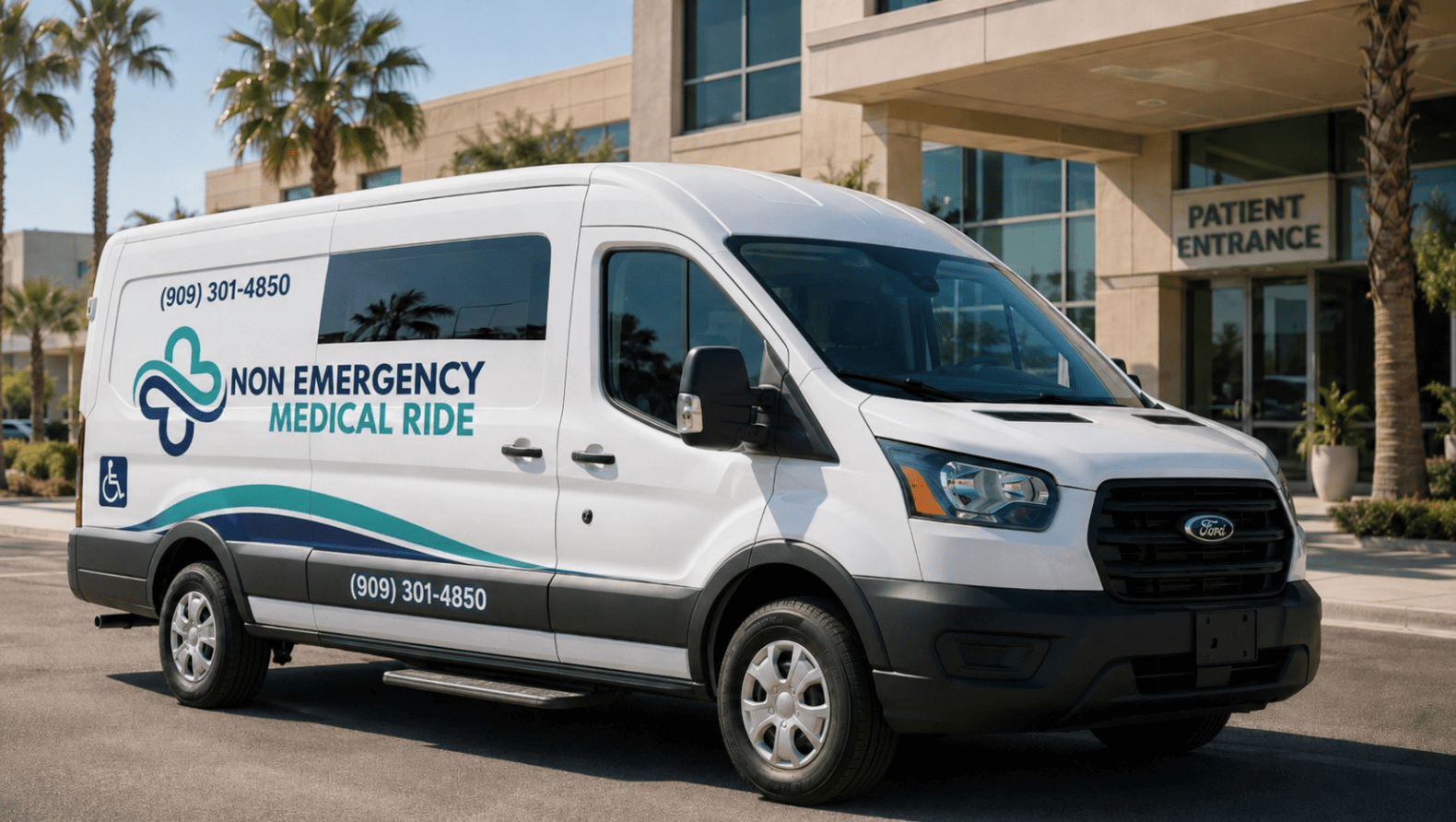
What is NEMT?
Who Needs Non-Emergency Medical Transportation?
Wheelchair users
Older adults
Patients traveling reclined
Recurring-treatment patients
Hospital discharge patients
Family and caregivers
What Types of NEMT Services Are Available?
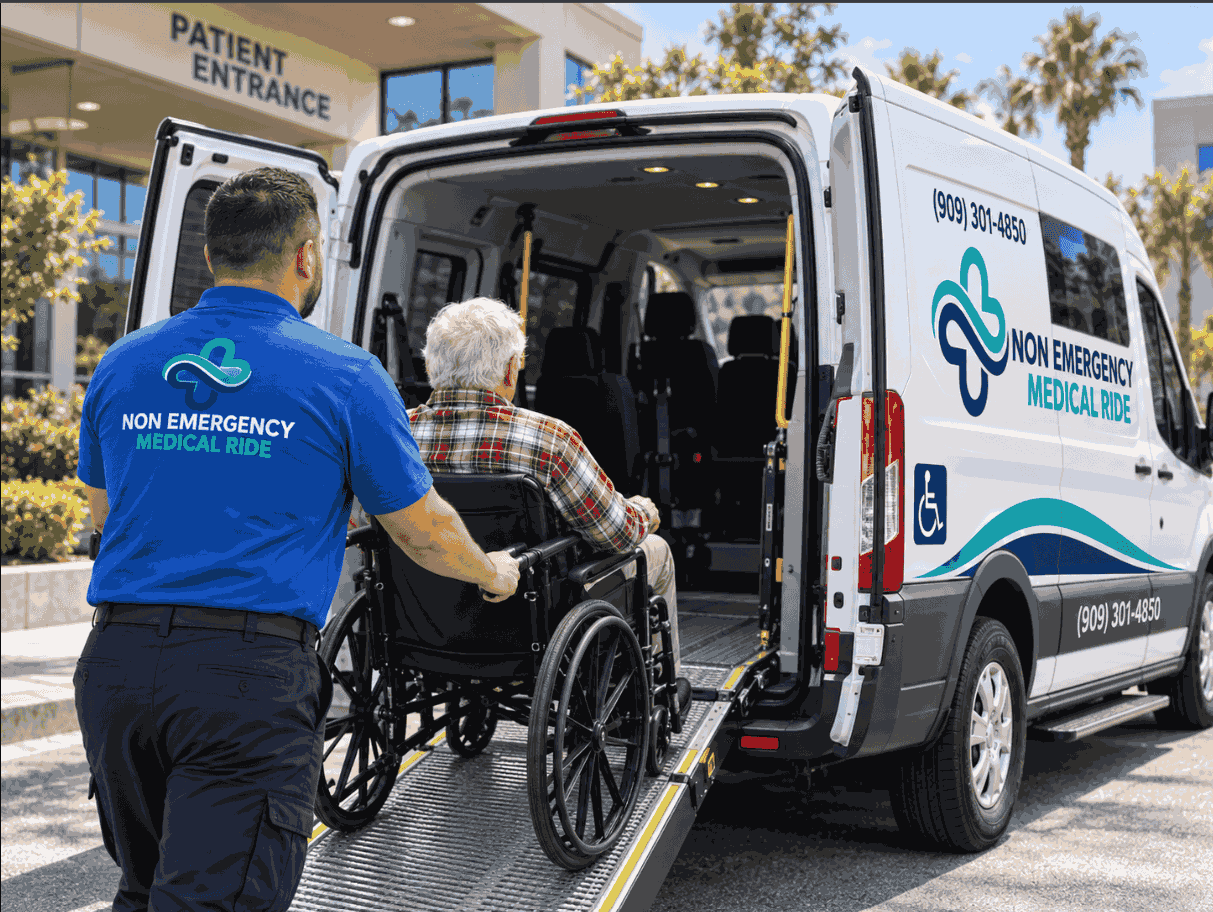
Wheelchair transportation
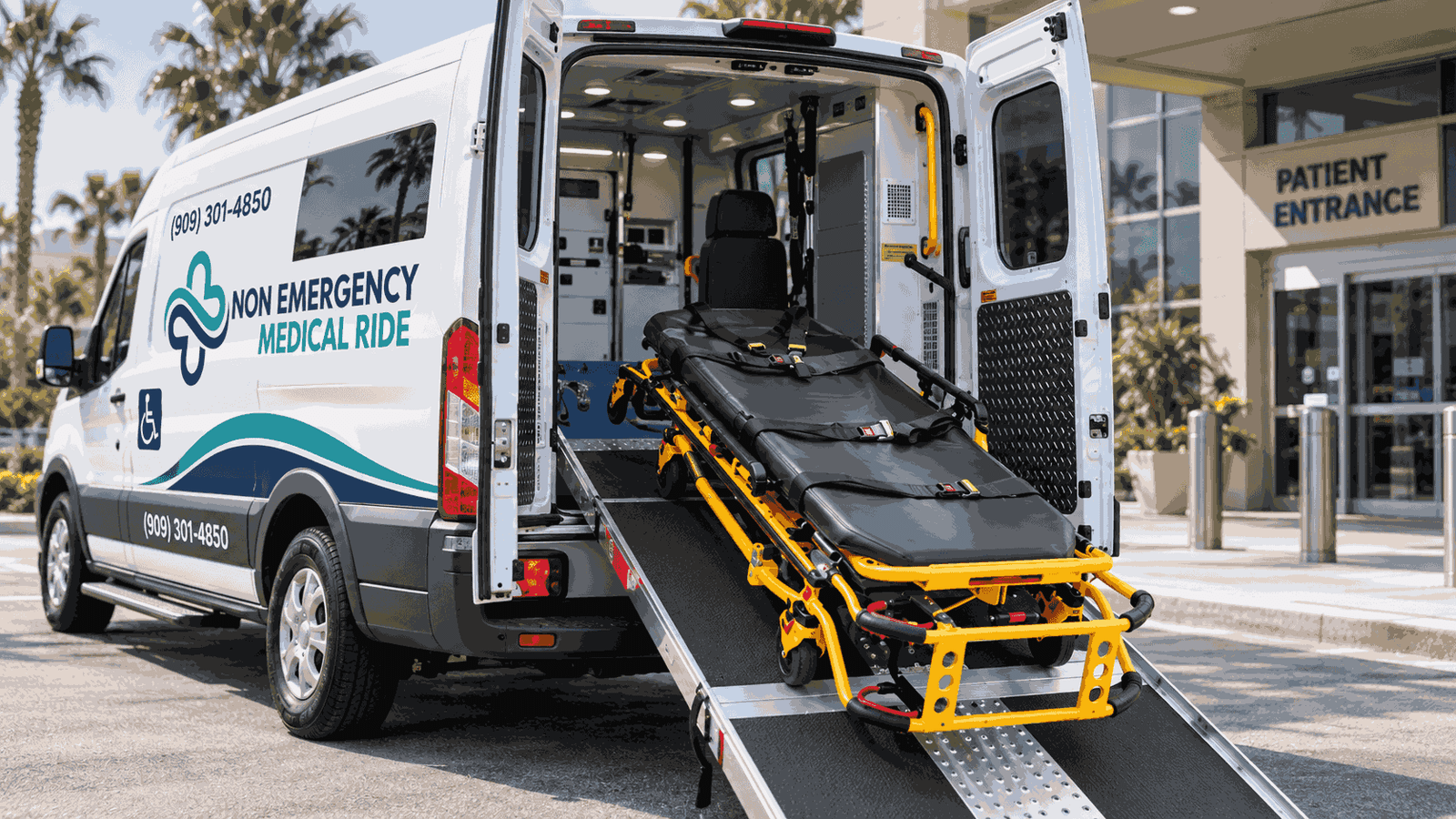
Stretcher and gurney transportation
NEMT vs. Emergency Ambulance vs. Regular Rideshare
Planned healthcare transportation
Urgent medical response
Standard passenger travel
What Medical Appointments Can NEMT Help With?
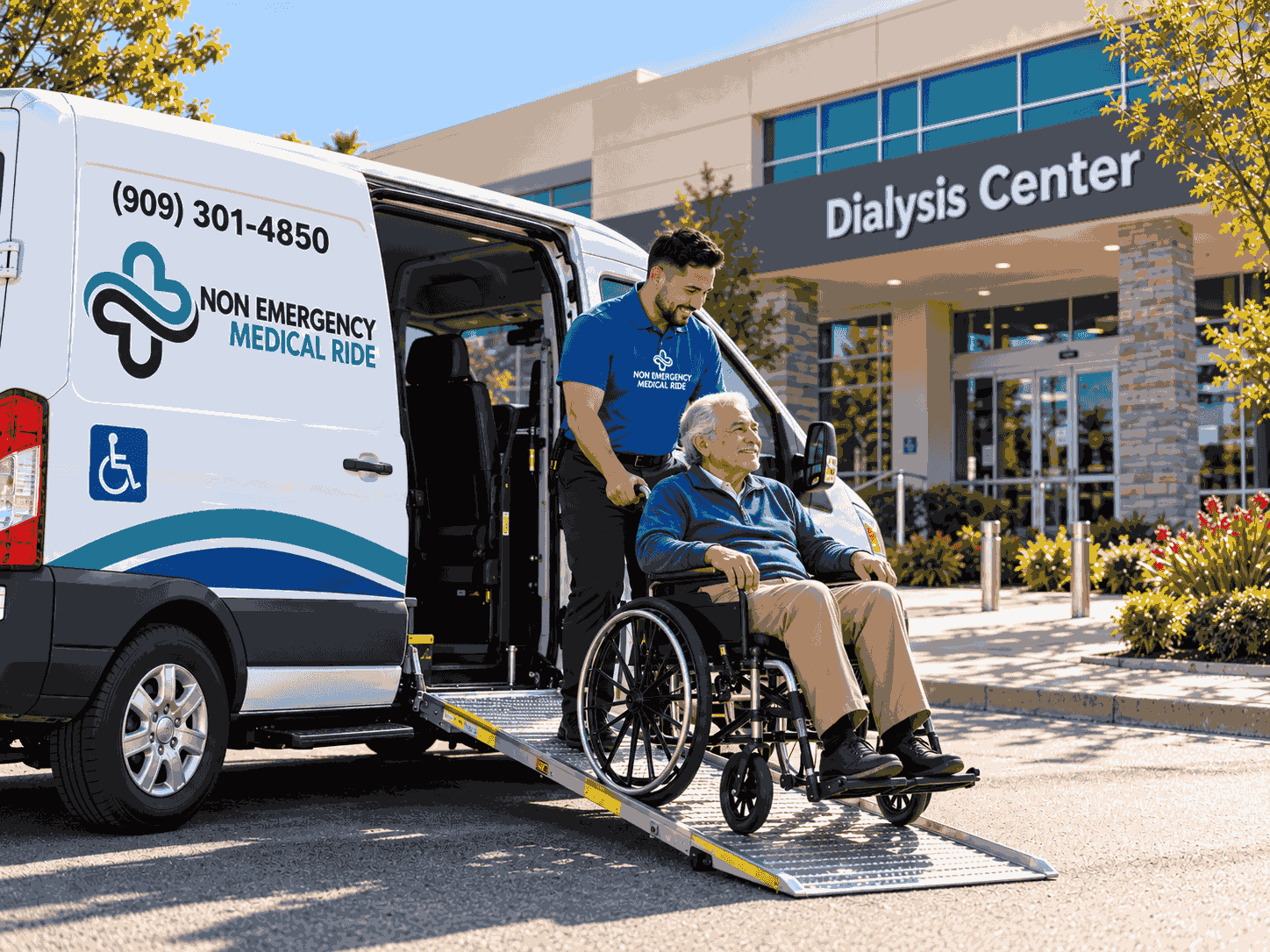
Dialysis and recurring treatment
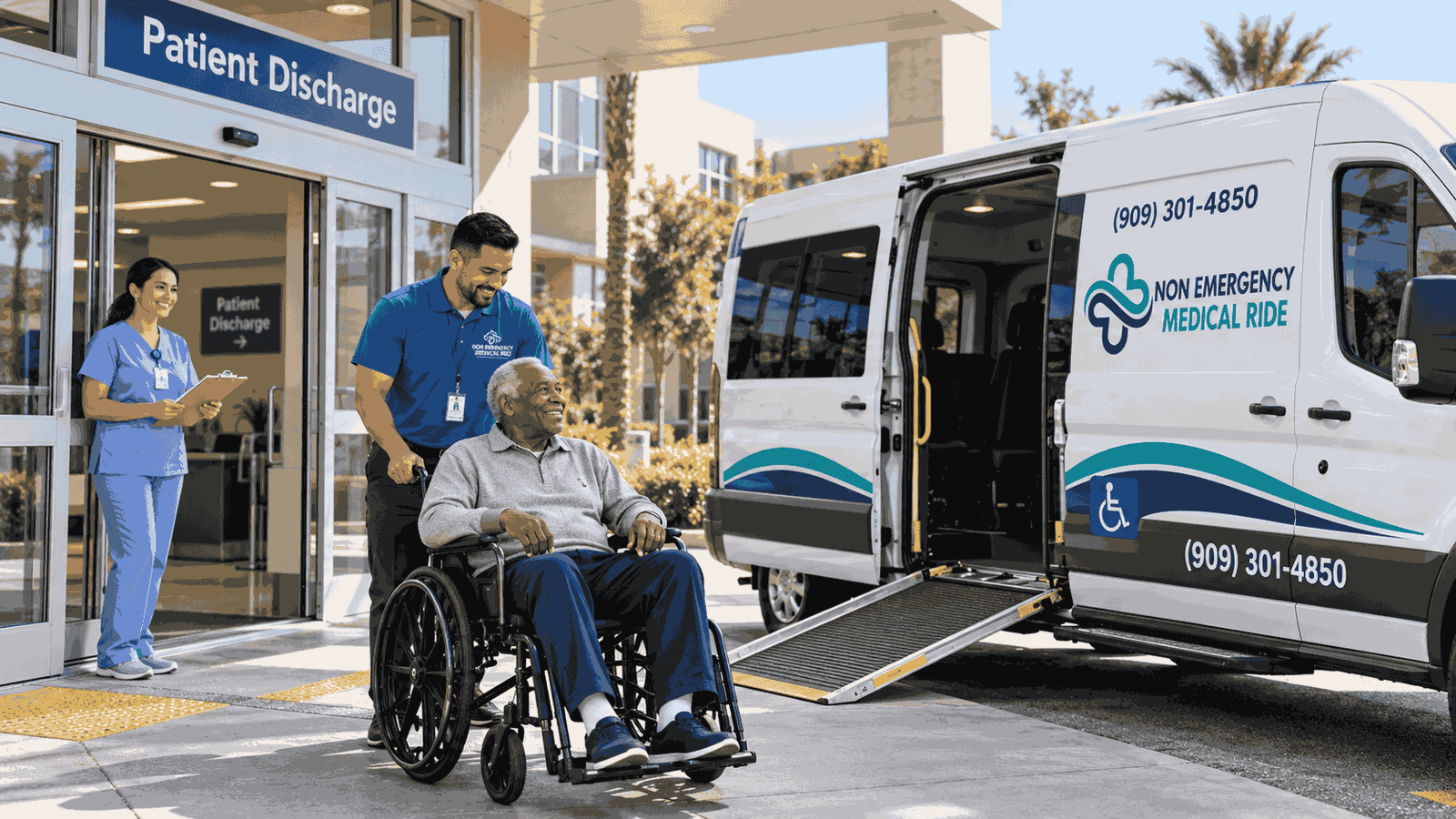
Hospital visits and discharge
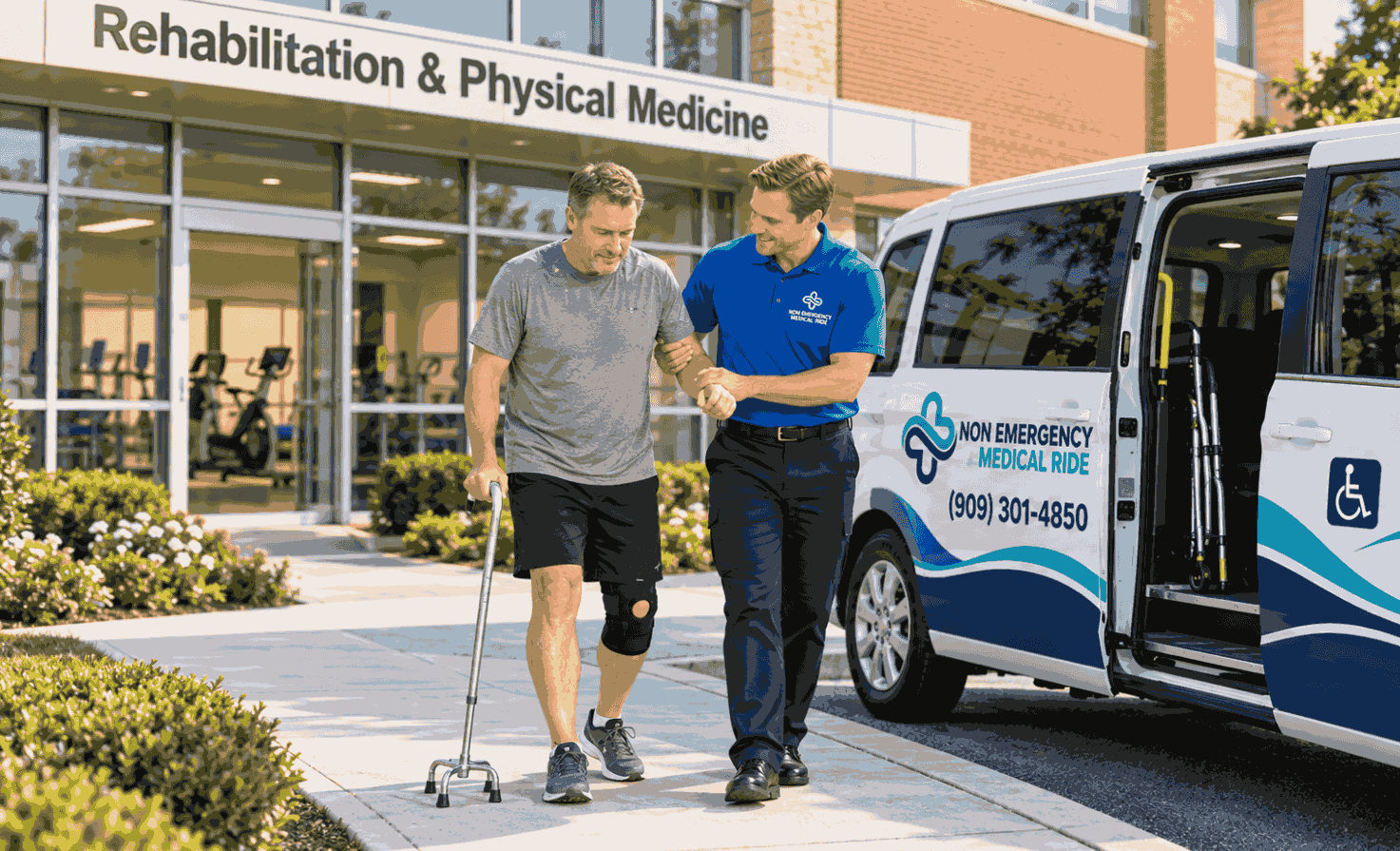
Rehabilitation, therapy and follow-up care
How Does Non-Emergency Medical Transportation Work?
Share the trip
Describe mobility needs
Confirm the arrangement
How Much Does NEMT Cost, and Who Pays for It?
Does Medicare or Medi-Cal cover medical transportation?
Non-Emergency Medical Transportation Near Me in Los Angeles County
Frequently Asked Questions About NEMT
What does NEMT stand for?
Is non-emergency medical transportation the same as an ambulance?
Can someone in a wheelchair use NEMT?
Can NEMT take someone home after hospital discharge?
Does Medicare or Medi-Cal pay for NEMT?
How much does NEMT cost?
Can a family member accompany the passenger?
Does Non Emergency Medical Ride offer a discount for recurring rides?
Sources and further reading
Need a Scheduled Medical Ride?

Patient Guide · Non-Emergency Medical Transportation
Private pay onlyLA County service10% off recurring rides
01 / Who it helps
02 / Vehicle and assistance
Other scheduled ride options: ambulatory transportation, senior medical transportation, and assistance with entrances or steps may be appropriate for different mobility needs. In Medi-Cal terminology, some ordinary car rides fall under non-medical transportation (NMT), not the specialized NEMT benefit.
03 / Know the difference
04 / Everyday healthcare journeys
05 / Simple booking process
1
2
3
Before pickup: Have the appointment address and arrival time ready, confirm the correct hospital or clinic entrance, and communicate any mobility changes before the scheduled trip.
06 / Pricing and insurance
Trip distance and routePickup, destination and travel requirements
Transportation typeAmbulatory, wheelchair or stretcher arrangement
Assistance and accessSteps, transfers, mobility equipment and other needs
Trip planOne-way, return trip, recurring schedule or waiting time
Important — our payment policy: Non Emergency Medical Ride LLC is a private-pay-only transportation provider. We do not bill Medicare, Medi-Cal or insurance. Any public transportation benefit described above is separate from our private-pay service.
07 / Los Angeles County
08 / Questions answered
Private-Pay NEMT · Los Angeles County