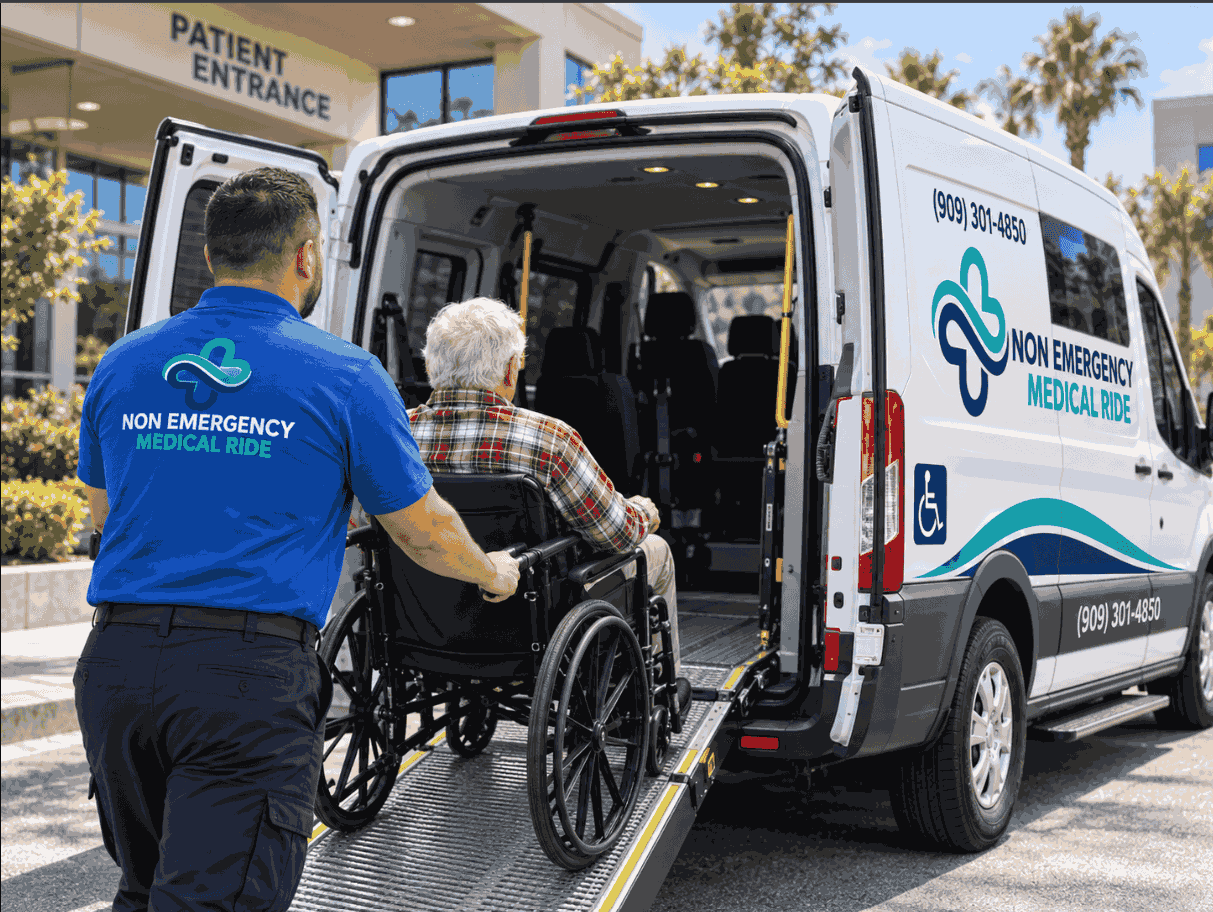
Compare non-emergency medical transportation, emergency and non-emergency ambulances, and regular rideshare. Learn when wheelchair access, CPR-trained transport personnel, supplemental oxygen arrangements, or an optional paid nurse or caretaker may matter. Each option serves a different purpose. The table summarizes general differences; a patient's treating team should determine whether ambulance-level care is medically necessary. Important California terminology: Medi-Cal uses “NEMT” for certain prescribed, specialized transportation options, including wheelchair vans, litter vans and ambulances. This article also discusses private-pay scheduled NEMT in the ordinary consumer sense. See California DHCS in the sources below. Consider NEMT when an appointment is planned and the passenger is medically stable enough for a non-emergency ride, but ordinary car transportation would be difficult, impractical or unsuitable. Someone may remain seated in a wheelchair, require an approved stretcher arrangement, use a walker or need help coordinating pickup at a medical facility. For example, a dialysis patient attending treatment three times a week may benefit from regular pickup instructions and return-trip coordination. A family arranging hospital discharge transportation may need to tell the provider which hospital entrance to use and whether the patient can transfer into a regular seat. Those details matter more than simply ordering a car. At Non Emergency Medical Ride LLC, relevant options include wheelchair-accessible transportation, stretcher and gurney transportation, and ambulatory medical rides. The team reviews a request before confirming the vehicle, assistance and scheduling. A ride request is not a reservation until it is accepted. Use emergency services for a potentially life-threatening condition or a sudden deterioration. Severe chest pain, stroke symptoms, serious breathing trouble, uncontrolled bleeding or loss of consciousness are examples of situations in which you should call 911, rather than booking NEMT or Uber. Do not delay emergency assessment to compare fares. There is also a category that people overlook: non-emergency ambulance transportation. A patient may have a scheduled transfer but still need ambulance-level supervision or equipment because travel by other means could endanger their health. Non-emergency does not mean that every medically vulnerable patient can safely ride in a wheelchair van or a standard vehicle. Medicare's ambulance rules focus on medical necessity and whether other transportation is contraindicated. A physician order can be part of the documentation for certain non-emergency ambulance trips, but it does not automatically guarantee coverage. When discharge planners, nurses or physicians recommend an ambulance, ask them what level of care the patient needs during travel. Medicare's ambulance coverage guidance explains the distinction. Yes, for some passengers. A person who can safely walk to the pickup point, enter a standard vehicle, sit with the seat belt fastened and get out independently may find an ordinary rideshare convenient. Going to a healthcare appointment does not automatically mean a specialized NEMT vehicle is necessary. However, standard UberX or other regular rideshare does not come with a guaranteed wheelchair ramp, stretcher accommodation, clinical monitoring or help with patient transfers. A shared or pooled ride—where offered—may also involve additional passenger stops, which can be unsuitable for someone who needs a predictable medical pickup or a direct trip. It is important to compare like with like. Uber offers WAV services with wheelchair-accessible vehicles and third-party-trained drivers in certain markets, and Assist options with extra assistance where offered. Uber Health may arrange specialized transportation through partners. These are not identical to a standard UberX ride, and their availability, responsibilities and service limits vary by program and location. When deciding between a dedicated medical transportation provider and an app-based option, check whether the exact vehicle can accommodate the passenger's wheelchair, whether door-to-door or door-through-door support is included, whether a return trip is needed, and whether a hospital or facility has particular pickup requirements. See Uber's WAV information for current product details. Choosing a dedicated medical transportation company is not simply about booking a van. It is about discussing the rider's mobility, confirming suitable vehicle access and coordinating the journey with the passenger, family or medical facility. Non Emergency Medical Ride LLC reports that its team has CPR training and relevant transportation certifications. These qualifications support the company's transportation responsibilities but should not be confused with emergency medical licensure. Our team has CPR training and is prepared to follow its training and emergency response procedures. CPR knowledge is valuable, but it does not mean we provide ambulance-level emergency care or continuous clinical monitoring. Our team holds certifications relevant to the transportation it provides. You can ask about the credentials applicable to your trip. We do not claim every team member is an EMT, paramedic or licensed nurse. Oxygen equipment is available for suitable trips, subject to advance review and confirmation. Tell us about prescribed oxygen needs, the equipment required and any monitoring instructions. Oxygen availability does not mean emergency oxygen treatment or medical monitoring is included. A nurse or caretaker may be arranged to accompany a passenger for an additional charge, subject to availability, the passenger's assessed needs and the professional's authorized duties. The type of attendant and exact scope of support must be confirmed before the ride. Families should explain the passenger's current condition, mobility aids, oxygen requirements, transfer needs and planned destination when requesting transport. If a medical professional determines that an ambulance or higher level of clinical care is required, our private-pay NEMT service is not a replacement. Our senior transportation, dialysis rides and rehabilitation transportation pages explain more about common journey types. The passenger cannot transfer safely into an ordinary car but is otherwise stable. The family needs a suitable accessible van, securement and a planned pickup. The passenger can walk, use a seat belt and travel alone without special assistance. Medical transport equipment is not needed. The patient is stable but needs repeat scheduled transportation, predictable return pickups and help with mobility-related arrangements. A clinician has determined the patient needs active monitoring or intervention during transport, even though the trip is scheduled. The person's condition may be time-critical. An ordinary ride or advance-booked medical van could delay appropriate assessment and treatment. Examples are educational and not individualized medical advice. When uncertain, ask the patient's treating clinician to clarify the required transportation level. There is no honest universal answer. Uber prices can vary by trip, product and demand; dedicated NEMT pricing depends on distance, accessibility needs, time, assistance, vehicle type, trip schedule and optional support; and ambulance charges depend on the clinical transport level and payer rules. The cheapest available ride is not necessarily a safe or appropriate ride. Non Emergency Medical Ride LLC is private-pay only. We do not bill Medicare, Medi-Cal or insurance. Our quotations are based on the specific trip and support requested. An optional accompanying nurse or caretaker is a separately paid service; confirm that cost before booking. All recurring patients receive a 10% discount. For context, California's Medi-Cal program does have NEMT and non-medical transportation benefits for eligible members. Those publicly funded services, eligibility rules and authorizations are separate from our private-pay offering. Medicare may cover certain medically necessary ambulance trips when its conditions are satisfied, but it generally does not pay for routine rides in an ordinary car. See California DHCS transportation services. Non Emergency Medical Ride LLC arranges private-pay, scheduled medical transportation for suitable trips throughout Los Angeles County, subject to route, vehicle and team availability. Healthcare journeys may involve hospitals, outpatient clinics, dialysis centers, rehabilitation facilities or specialist appointments. Explore local service information for Los Angeles, Long Beach, Pasadena and Glendale, or browse the complete Areas We Serve directory. The best way to check a ride is to share the actual pickup, destination and passenger support needs. Share pickup, destination, appointment time and whether you need one-way, round-trip or repeat rides. Tell us about wheelchair or stretcher access, steps, transfers, oxygen needs and optional attendant requests. Confirm service suitability, availability, optional fees and scheduling before treating the ride as booked. No. A scheduled NEMT ride can provide appropriate mobility equipment and transportation assistance, but it does not automatically provide emergency medical services or continuous clinical monitoring. Non-emergency ambulance transport also exists for patients who medically require ambulance-level care. Call 911 for a medical emergency, including sudden stroke symptoms, severe chest pain, serious breathing problems, major bleeding or loss of consciousness. Do not wait for a scheduled NEMT or rideshare pickup. Yes, if you can safely use an ordinary passenger vehicle and do not need specialized transport or assistance. A medical destination alone does not mean NEMT is required. Uber WAV offers wheelchair-accessible vehicles and third-party-trained drivers in select markets. Availability and exact assistance differ from ordinary UberX and from dedicated NEMT services, so check the specific product before arranging the ride. According to the company, its transportation team has CPR training and certifications relevant to its transportation duties. These qualifications do not mean every driver is a licensed nurse, EMT or paramedic. Ask the team about the credentials applicable to your trip. The company reports that oxygen equipment is available for suitable prearranged trips. Any prescribed oxygen requirements, equipment needs and monitoring instructions must be reviewed and confirmed before scheduling. The service is not a substitute for ambulance-level oxygen treatment or clinical monitoring. A nurse or caretaker may be arranged as an optional, paid accompaniment service, subject to availability, the passenger’s needs and the professional’s authorized duties. Request this in advance and confirm the additional cost and scope of care. A regular rideshare vehicle does not provide stretcher transport. A patient who needs to travel lying down may require an appropriate non-emergency stretcher vehicle or an ambulance, depending on the treating clinician’s assessment and support needs. No. Non Emergency Medical Ride LLC is a private-pay provider and does not bill Medicare, Medi-Cal or insurance. Public-program transportation benefits may be available through other authorized arrangements, subject to eligibility. Yes. Non Emergency Medical Ride LLC offers a 10% discount for all recurring patients. Share your recurring appointment schedule and mobility requirements when requesting a quote. Call 909-301-4850 or use the Request a Ride page. Provide your pickup and destination addresses, appointment time, mobility and equipment needs, any oxygen considerations, and whether you want optional paid nurse or caretaker support. Availability and pricing must be confirmed before the ride is booked. Public authorities and provider documentation explain clinical transport definitions and coverage. Company-specific training, equipment and optional attendant availability are information provided by Non Emergency Medical Ride LLC and should be independently confirmed before a particular trip. For urgent symptoms, call 911. For a planned, non-emergency trip, tell us about the passenger's needs. We can explain our transportation options, oxygen arrangements and any optional paid nurse/caretaker support. Recurring patients receive 10% off.
NEMT vs. Ambulance vs. Uber: Which Medical Ride Is Right for You?
NEMT vs. Ambulance vs. Rideshare: Side-by-Side Comparison
What matters Scheduled NEMT Ambulance Regular Uber / rideshare Primary purpose Planned transport matched to medical appointment and mobility needs Emergency response or medically necessary ambulance-level transport Ordinary passenger travel, including trips to appointments Wheelchair access Available when an appropriate accessible vehicle is arranged Depends on ambulance setup; includes stretcher transport where required Ordinary cars are not wheelchair-accessible; WAV is a separate option where available Stretcher / gurney Can be available for appropriate, medically stable non-emergency passengers Available with ambulance-level personnel and equipment as appropriate Not a standard rideshare service Clinical monitoring Not inherently included; ask about any separately arranged licensed support Medical personnel and equipment appropriate to the level of ambulance service Not provided by a regular ride Scheduling Planned one-way, round-trip or recurring rides 911 for emergencies; non-emergency ambulance may be prescheduled On-demand or scheduled based on the rideshare product Payment Varies by provider; Non Emergency Medical Ride LLC is private-pay only Insurance may cover qualifying ambulance trips subject to conditions Usually app-based fares or arrangements through a sponsor When Is Non-Emergency Medical Transportation the Better Choice?
When Should a Patient Use an Ambulance Instead of NEMT?
Can I Use Uber or a Regular Shared Ride for a Medical Appointment?
What about Uber WAV, Uber Assist and Uber Health?
What Makes Our Medical Transportation Team Different from a Regular Driver?
CPR-trained transportation personnel
Transportation-specific certifications
Oxygen arrangements discussed in advance
Optional paid nurse or caretaker
Five Examples: Which Medical Ride Should You Choose?
Is NEMT Cheaper Than an Ambulance or Uber?
Looking for NEMT Instead of Uber Near You in Los Angeles County?
Tell us the route
Describe the support
Review the quote
Frequently Asked Questions: NEMT vs. Ambulance vs. Uber
Is NEMT the same as an ambulance?
When should I call 911 instead of booking medical transportation?
Can I take an Uber to a hospital or doctor appointment?
Does Uber have wheelchair-accessible vehicles?
Are Non Emergency Medical Ride LLC drivers CPR trained and certified?
Does Non Emergency Medical Ride LLC have oxygen available?
Can a nurse or caretaker travel with the patient?
Can a stretcher patient use Uber instead of NEMT?
Does Medicare or Medi-Cal pay Non Emergency Medical Ride LLC?
Is there a discount for recurring dialysis or rehabilitation trips?
How do I request private-pay NEMT in Los Angeles County?
Sources and further reading
Not Sure Whether You Need NEMT or an Ambulance?

NEMT Patient Guide · Los Angeles County, CA
The right transportation choice starts with the passenger's needs.
Los Angeles CountyPrivate-pay transportationOptional nurse or caretaker10% recurring discount
NEMT is not always the lowest level of care. If a person needs active medical monitoring, frequent clinical intervention or emergency treatment, the treating clinician may determine that an ambulance is the appropriate option—even if the trip is planned in advance.
Safety boundary: CPR training, transport certifications, the availability of oxygen equipment or the option to request a nurse does not turn a non-emergency medical transportation van into an emergency ambulance. Only book transport that is appropriate to the passenger's condition and the provider's authorized scope.
Useful quote checklist: provide the pickup address, healthcare facility, arrival time, one-way or round-trip preference, wheelchair/stretcher needs, stairs or transfer details, any prescribed oxygen arrangements and whether you want an optional paid nurse or caretaker.
1
2
3
Private-pay medical transportation · Los Angeles County